

Helping pharmacists manage medicine shortages
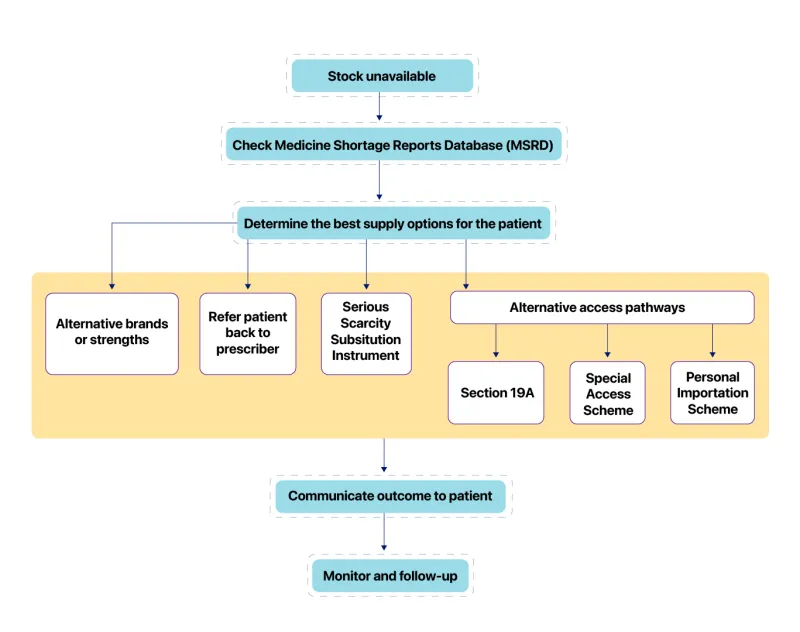
Pharmacists play a crucial role when medicine shortages occur. By providing advice about alternative medicines or treatments, and arranging supply of alternative products, you can lessen the impact of a shortage on patients.
A medicine shortage occurs when the supply of a medicine is not likely to meet the normal or projected consumer demand within Australia at any point during the next 6 months. Shortages can be caused by a number of factors, including increased demand for a medicine, manufacturing disruptions, scarcity of ingredients and supply-chain issues.
The TGA monitors, communicates and responds to medicine shortages at a national level. We publish information about current shortages on our Medicine Shortage Reports Database (MSRD). It’s important for pharmacists to know how to access alternative products using section 19A and Serious Scarcity Substitution Instruments (SSSIs).
In many cases, pharmacists and prescribers are able to provide or prescribe another approved medicine that is on the Australian Register of Therapeutic Goods (ARTG) or they can give a different strength or dosage of the same medicine.
If you are unable to provide a patient with their regular medicine there are other options. You may be able to supply an alternative medicine as part of a Serious Scarcity Substitution Instrument, or through an alternative access pathway, such as Section 19A, the Special Access Scheme or via the Personal Importation Scheme.
Section 19A
Section 19A of the Therapeutic Goods Act 1989 allows us to approve overseas-registered medicines to be imported and supplied in Australia temporarily because of the shortage of another Australian registered medicine. These overseas-registered medicines have been assessed for quality, safety and effectiveness by an international regulator, but not by the TGA.
Pharmacists can supply these medicines using a patient’s existing prescription.
However, you should always use your professional judgment when assessing the suitability of an alternative product, and refer patients back to their prescriber where appropriate.
Information about section 19A approvals, including ordering details, are published on the TGA’s Section 19A Approvals Database.
Serious Scarcity Substitution Instruments
Serious Scarcity Substitution Instruments (SSSIs) allow pharmacists to substitute specific medicines during a shortage without prior approval from the prescriber, provided they meet the permitted circumstances within the SSSI.
Using an SSSI, you can supply essential substitute medicines without delay, ensuring treatments are not interrupted. It can also relieve workload pressure on prescribers and pharmacists.
SSSIs are published on the medicine shortages alert page.
Pharmacists are encouraged to subscribe to the TGA’s Medicine shortages alert service or social media channels for updates on new SSSIs and those that have been lapsed or cancelled.
Special Access Scheme
A prescriber can submit an application to the TGA for an individual patient to access unapproved medicines (medicines that have not been registered on the ARTG) via the Special Access Scheme (SAS) if:
- they reasonably believe that there are limited therapeutic options
- they have trialled or considered therapies included in the ARTG.
As a pharmacist, you can submit SAS applications on behalf of the prescriber and check the status and other relevant information about active applications and notifications.
Read detailed information about the process at: Special Access Scheme (SAS): Guidance for health practitioners accessing unapproved therapeutic goods.
Personal Importation Scheme
Individuals may also be able to import therapeutic goods for their personal use under the Personal Importation Scheme.
Find out more
Visit the medicine shortage reports database for information about specific shortages.
You can use this page to find information about management actions, including supply of overseas alternative medicines.
Authorised by the Australian Government, Canberra
Related content
-
Health practitioners – how to access medicines during a national shortage
When medicines are in short supply, it can sometimes make patient care more difficult for health practitioners.
We aim to provide clear, timely information to help you access the medicines your patients need during a national medicine shortage. When appropriate, we also make other medicines available so patient care can continue. -

What to know if you've been prescribed medicinal cannabis
Understanding the difference between an approved and unapproved therapeutic good can help you make informed decisions and have meaningful conversations with your healthcare practitioner, especially when considering treatments like medicinal cannabis. -

Medicine shortages - don't get caught short
Find out how mandatory reporting of medicine shortages will help you.