

Code of practice for tamper-evident packaging of therapeutic goods
A code of practice for those involved in the design, selection and use of tamper-evident packaging.
This code of practice is for sponsors, manufacturers, component suppliers and members of industry bodies who are involved in the design, selection and use of tamper-evident packaging for therapeutic goods.
Purpose
The purpose of tamper-evident packaging is to alert consumers of possible safety concerns before they purchase or use goods.
This code of practice provides guidance on tamper-evident packaging for therapeutic goods.
Compliance with the code improves the security of therapeutic goods supplied in Australia and increases the likelihood that consumers can identify when a product has been tampered with.
The code is not mandatory, but it has been established as a condition for membership for some relevant industry associations.
The Code of Practice for the Tamper-Evident Packaging (TEP) of Therapeutic Goods was originally published in June 2003 by the Therapeutic Goods Administration (TGA) after consultation with key industry associations, state health authorities and consumers.
In 2009, the code was reviewed by the Therapeutic Goods Committee with consultation with relevant stakeholders; no changes to the scope or technical requirements were identified.
This version of the code of practice does not introduce any new requirements for tamper-evident packaging but is an update that reflects contemporary practices.
Tamper evident packaging (TEP) means packaging that has an indicator or barrier to entry which, if breached or missing, can reasonably be expected to provide visible or audible evidence to consumers that tampering may have occurred.
How to use the code of practice
Use the code of practice as a guide for the design, selection and validation of tamper-evident packaging.
It can also be used as a reference for selecting appropriate tamper-evident labelling statements.
What the code applies to
This code of practice is intended for any therapeutic good that is claiming or presented as being supplied in tamper-evident packaging.
In particular, it should be applied to therapeutic goods that can be accessed by the general public before purchase.
These include medicines, devices and other therapeutic goods that are either:
- unscheduled
- OR
- subject to Schedule 2 or Schedule 3 to the Poisons Standard
- AND are:
- ingested orally
- administered transdermally
- applied to, or come into contact with, mucous membranes, including tampons, lubricants with/without spermicide/viricide, and condoms with/without spermicide or viricide
- for ophthalmic use or for use with contact lenses
If sponsors choose to use tamper-evident packaging for medical devices that are not available to the general public, they must use an acceptable form of packaging that will meet the Essential Principles relating to product safety outlined in the Therapeutic Goods (Medical Devices) Regulations 2002.
Requirements for tamper-evident packaging
To comply with this Code of Practice, tamper-evident packaging must:
- be designed to remain intact when the goods are handled in a reasonable manner, including during manufacture, distribution and retail display
- include a tamper-evident statement on the package (see Labelling)
- not obscure or destroy any mandatory label information (see Labelling)
In addition, for two-piece capsules (i.e. where the capsule shell is composed of two pieces - a body and a cap), the packaging must:
- use a minimum of two tamper-evident packaging features (see Tamper-evident features)
For all other products, the packaging must:
- use a minimum of one tamper-evident packaging feature (see Tamper-evident features)
Tamper evident packaging does not replace or obviate the need for child-resistant packaging where the law requires such packaging (Therapeutic Goods Order No. 80).
If child-resistant packaging is required, then use tamper evident packaging in conjunction with child-resistant packaging.
Tamper-evident features
Tamper-evident features are barriers or devices on the packaging, which if breached or missing, reveal irreversibly to consumers that tampering may have occurred.
The features can be used on primary packaging, the container or both.
Acceptable forms of tamper-evident features
Examples of acceptable forms of tamper-evident features are described below. Other forms of tamper-evident packaging may also be acceptable, provided they are appropriate for the product and suitably validated.
The feature used must be appropriate for the product in question and validated in accordance with design and validation principles.
In selecting a tamper-evident feature, consider the special needs of some consumers, such as arthritic, manually impaired or elderly persons.
| Image | Description |
|---|---|
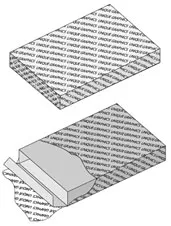
Figure 1 Transparent film wrapper | Film wrappers, transparent
|
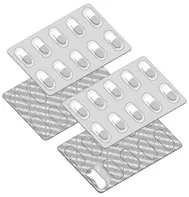
Figure 2 Blister pack | Blister or strip packs
|
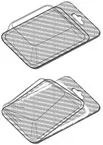
Figure 3 Bubble pack | Bubble packs
|
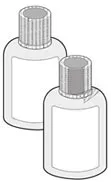
Figure 4 Heat shrink band | Heat shrink bands or wrappers
|
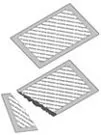
Figure 5 Pouches and sachets | Pouches, sachets and form-fill seal packs
|
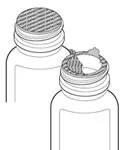
Figure 6 Container mouth inner seal | Container mouth inner seals Paper, thermal plastic, polystyrene foam, plastic film, foil, or combinations thereof, with a distinctive design is sealed to the mouth of a container under the cap. |
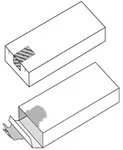
Figure 7 Tape seal | Tape seals
|
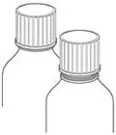
Figure 8 Breakable cap | Breakable caps
|
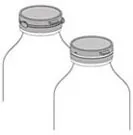
Figure 9 Tear away cap | Tear away caps
|
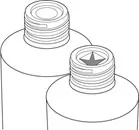
Figure 10 Sealed metal tube | Sealed metal tubes
|
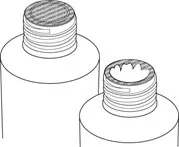
Figure 11 Sealed plastic and | Sealed plastic and laminate tubes
|
Cans, all metal and composite
| |

Figure 12 Sealed two-piece | Sealed two-piece capsules
For unsealed capsules, the packaging requires two tamper-evident features. |
In-built tamper-evident controls
Products such as in-vitro diagnostics with in-built controls that indicate if the product is unacceptable for use (i.e. a test-method failure) are considered as having tamper-evident controls. Such products are considered to comply with the code of practice without needing additional packaging or labelling.
- The controls must be obvious to the user when trying to access the test results and from the packaging information and instructions
Packaging that is not tamper-evident
Some packaging available for use with therapeutic goods is not considered to be tamper-evident. These types of packaging may be easily breached and/or do not provide an adequate indication of likely tampering.
Packaging examples which are not considered to be tamper-evident include:
- Paperboard cartons which have been sealed by gluing the end flaps and / or side-seam together without the addition of other tamper-evident features such as tape seals or film wrappers
- Tinted film wrappers or bands which are not distinctive by design
- Film wrappers manufactured from cellophane
- Cellulose wet shrink seals
Design and validation
The sponsor or manufacturer must have documented evidence to support the suitability of the tamper-evident packaging (TEP) that includes the:
- design qualification of the TEP and its suitability/compatibility of components with the product and compliance with required TEP statements
- specifications for the TEP including details of the approved supplier, functional /performance criteria and critical attributes
- validation of the effectiveness (function) of the TEP as wells as the manufacturing process used to apply the TEP to the goods
- requirements for routine sampling and testing of incoming TEP packaging componentry and applied (assembled) TEP devices
Labelling
All goods that are sold in tamper-evident packaging, must include a tamper-evident statement on the pack.
This must:
- describe the tamper-evident feature(s) (including any identification characteristics)
- warn that the absence of, or damage to, such feature(s) at the time of purchase is an indication of possible tampering
Examples of acceptable wording for tamper-evident statements are below.
Any mandatory label information must not be destroyed or obscured by the use of tamper-evident packaging. Examples of mandatory labelling requirements for therapeutic goods include Therapeutic Goods Order No. 69 – General requirements for labels for medicines, Therapeutic Goods Order No. 92 – Standard for labels of non-prescription medicines and the Poisons Standard.
Where to place the wording
The tamper-evident statement must be placed:
- on the package so that it will be unaffected if the tamper-evident feature is breached or missing
For products with a container and primary pack, the statement should be placed either:
on both the container and primary pack
OR
- on the container, alerting the consumer that the container should be inside a carton (or other primary pack) at the time of purchase
For sachets not for individual sale, blister or strip packs and small containers, it is acceptable for the tamper-evident packaging statement to be included only on the primary pack.
Due to the potential for paper labels to be removed and/or substituted, direct printing of the statement, or full label, on the container may be more effective than a paper label.
A primary pack, in relation to therapeutic goods, means the complete pack in which the goods, or the goods and their container, are to be supplied to consumers.
Examples of acceptable wording
Examples of acceptable wording are listed in the table below. Alternative wording that delivers equivalent consumer understanding is also acceptable e.g. some generic statements as supplied on packaging components by packaging material manufacturers.
We encourage you to use performance-based labelling principles.
| Tamper-evident feature | Examples of acceptable wording |
|---|---|
| Film wrappers | Do not use if film wrapper is damaged or missing |
| Blister or strip packs | Do not use if blister seal is broken Do not use if blister backing is damaged |
| Bubble packs | Do not use if blister seal is broken |
| Heat shrink bands or wrappers | Do not use if seal (around cap/under lid, etc.) is broken or missing Do not use if tape (band) around cap is damaged Band around cap must be present to ensure package security The seal over/around the cap is your assurance that the package has not been opened For your protection, this bottle has an imprinted seal around the neck |
| Pouches: foil, paper, or plastic | Do not use if pouch is torn |
| Bottle mouth inner seals | Do not use if inner foil liner is missing or broken Bottle sealed under cap for your protection |
| Tape seals | Now with tamper-evident carton seal Tape over carton flaps must be unbroken Use only if carton seal is unbroken Do not use if seals over carton ends are missing or broken |
| Breakable caps | Now with tamper-evident cap seal Bottle has been opened if cap is separated Use only if cap seal is unbroken The seal on the cap is your assurance that the package has not been opened Do not use if cap seal is broken |
| Tubes: sealed metal or plastic blind-end heat-sealed | Do not use if foil seal at mouth of tube is broken Do not use if sealed tip is cut |
| Cans (all-metal and composite) | Do not use if can is damaged |
| In-built tamper-evident controls | Sterile if in unopened undamaged pack |
| Sterile medical devices | Sterile if in unopened undamaged pack |
Page history
Revised format
Original publication
Revised format
Original publication